Understanding Dyslexia: Latest Research and Evidence-Based Approaches
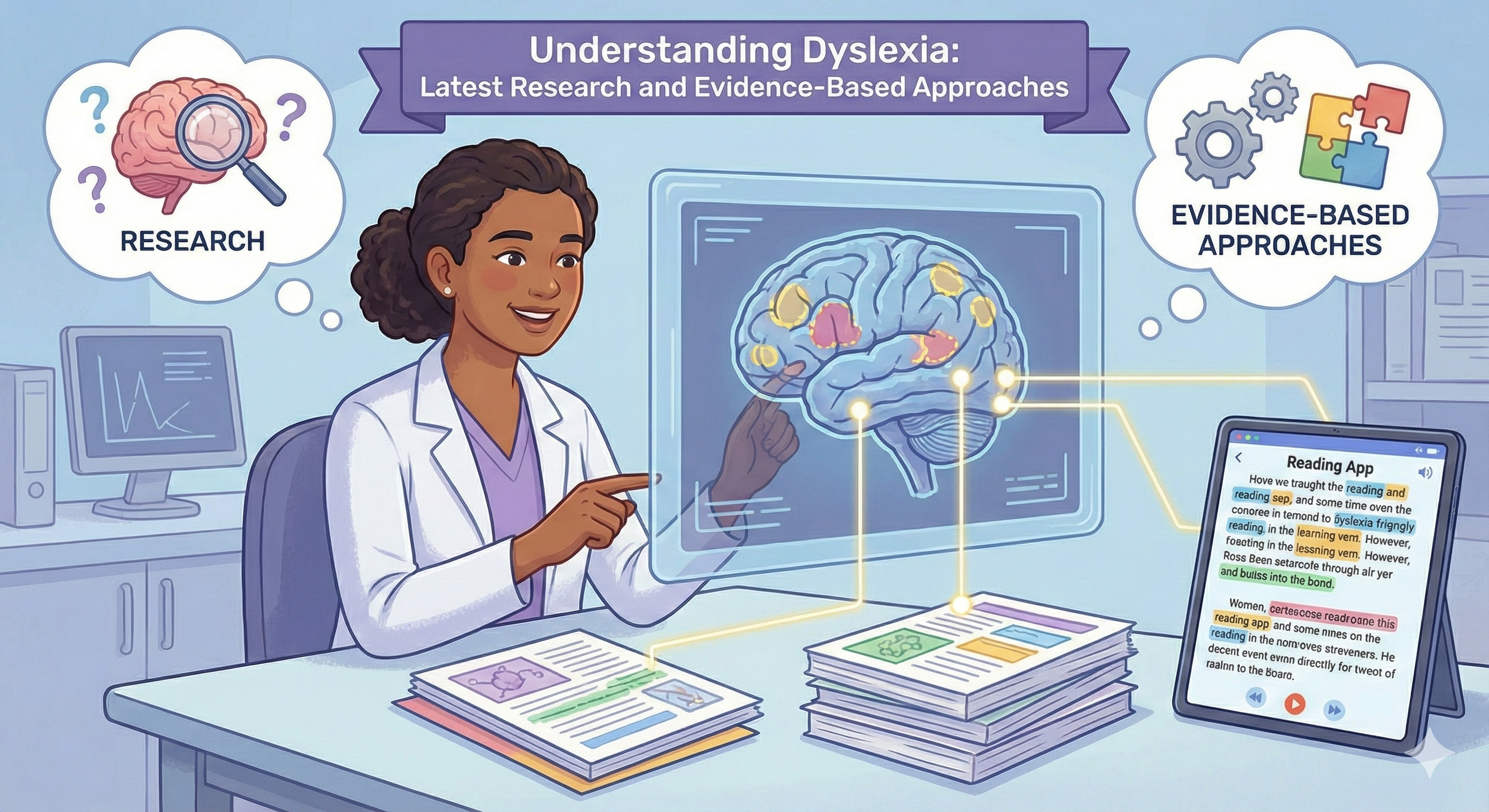
Over the past three decades, neuroscience and cognitive psychology have revolutionized our understanding of dyslexia. What was once dismissed as laziness or low intelligence is now recognized as a specific neurological difference in how the brain processes written language. This article explores the latest research findings and the evidence-based interventions that make a real difference.
The Neuroscience of Dyslexia
Brain imaging studies have identified key differences in how dyslexic and non-dyslexic brains process reading. These findings have profound implications for how we approach intervention.
Key Research Findings:
Left Hemisphere Differences
The left temporoparietal and occipitotemporal regions show reduced activation during reading tasks in individuals with dyslexia (Shaywitz et al., 2002).
Compensatory Right-Brain Activity
Many dyslexic readers develop compensatory pathways in the right hemisphere, which may contribute to their often-noted strengths in big-picture thinking.
Plasticity and Change
Importantly, effective intervention can change brain activation patterns, demonstrating neuroplasticity (Simos et al., 2002).
These findings confirm that dyslexia is biological in origin—not the result of poor teaching, inadequate effort, or environmental factors alone. This understanding should remove stigma and guide our approach to intervention.
The Phonological Processing Theory
The most well-established explanation for dyslexia is the phonological deficit hypothesis. Research consistently shows that individuals with dyslexia have difficulty with phonological processing—the ability to identify and manipulate the sound structure of language.
What This Means in Practice:
- Difficulty with phoneme awareness: Trouble identifying individual sounds in words
- Slow phonological decoding: Difficulty sounding out unfamiliar words
- Weak phonological memory: Trouble holding sounds in working memory
- Slow rapid naming: Takes longer to quickly name familiar items
This understanding directly informs intervention: effective programs must explicitly and systematically teach phonological awareness and phonics skills.
Evidence-Based Interventions That Work
Not all reading programs are equally effective for dyslexia. Research has identified specific characteristics of interventions that produce meaningful improvements.
Structured Literacy / Orton-Gillingham Approach
The gold standard for dyslexia intervention. These programs are:
- Explicit and direct
- Systematic and cumulative
- Multisensory
- Diagnostic and prescriptive
Programs: Wilson Reading, Barton Reading, Lindamood-Bell
Text-to-Speech and Assistive Technology
Research supports the use of assistive technology as a complement to intervention:
- Provides access to grade-level content while reading skills develop
- Reduces fatigue and frustration during reading tasks
- Synchronized highlighting reinforces word recognition
Tools like DyslexiaBuddy combine TTS with features specifically designed for dyslexic readers.
Intensive and Sustained Intervention
Research shows that intensity matters:
- 45-90 minutes of daily instruction produces better outcomes than less intensive approaches
- One-on-one or small group instruction (1:3 ratio) is most effective
- Intervention should continue until skills are solidly established—not just improved
What the Research Says Doesn't Work
Unfortunately, many popular "treatments" for dyslexia lack scientific support. Parents and educators should be wary of approaches that:
- Vision therapy: While vision problems should be addressed, there's no evidence that eye exercises treat dyslexia
- Colored lenses (Irlen): May help some with visual stress, but doesn't address core reading difficulties
- Brain training games: Limited transfer to actual reading skills
- Movement-based programs: No evidence that balance or coordination exercises improve reading
The best use of time and resources is structured literacy instruction that directly targets phonological processing and decoding skills.
Current Research Frontiers
Dyslexia research continues to advance. Here are some exciting areas of current investigation:
Early Identification
Researchers are developing screening tools that can identify at-risk children before they struggle with reading, enabling earlier intervention.
Genetic Research
Studies have identified several genes associated with dyslexia, improving our understanding of its hereditary nature.
AI and Personalization
Artificial intelligence is enabling more personalized reading interventions that adapt to individual learning patterns.
Multilingual Dyslexia
Research is expanding to understand how dyslexia manifests across different languages and writing systems.
Putting Research into Practice
The science is clear: dyslexia is a real neurological difference that requires specific, evidence-based intervention. Generic reading instruction is not enough.
The good news is that we know more than ever about what works. Structured literacy programs, combined with appropriate assistive technology and emotional support, can help individuals with dyslexia become confident, capable readers.
By staying informed about research and advocating for evidence-based approaches, parents and educators can ensure that every child with dyslexia has the opportunity to reach their full potential.
Evidence-Based Reading Support
DyslexiaBuddy uses research-backed features like synchronized highlighting, dyslexia-friendly fonts, and AI-powered assistance.
Download DyslexiaBuddy