A Parent's Guide to Supporting Your Child with Dyslexia at Home
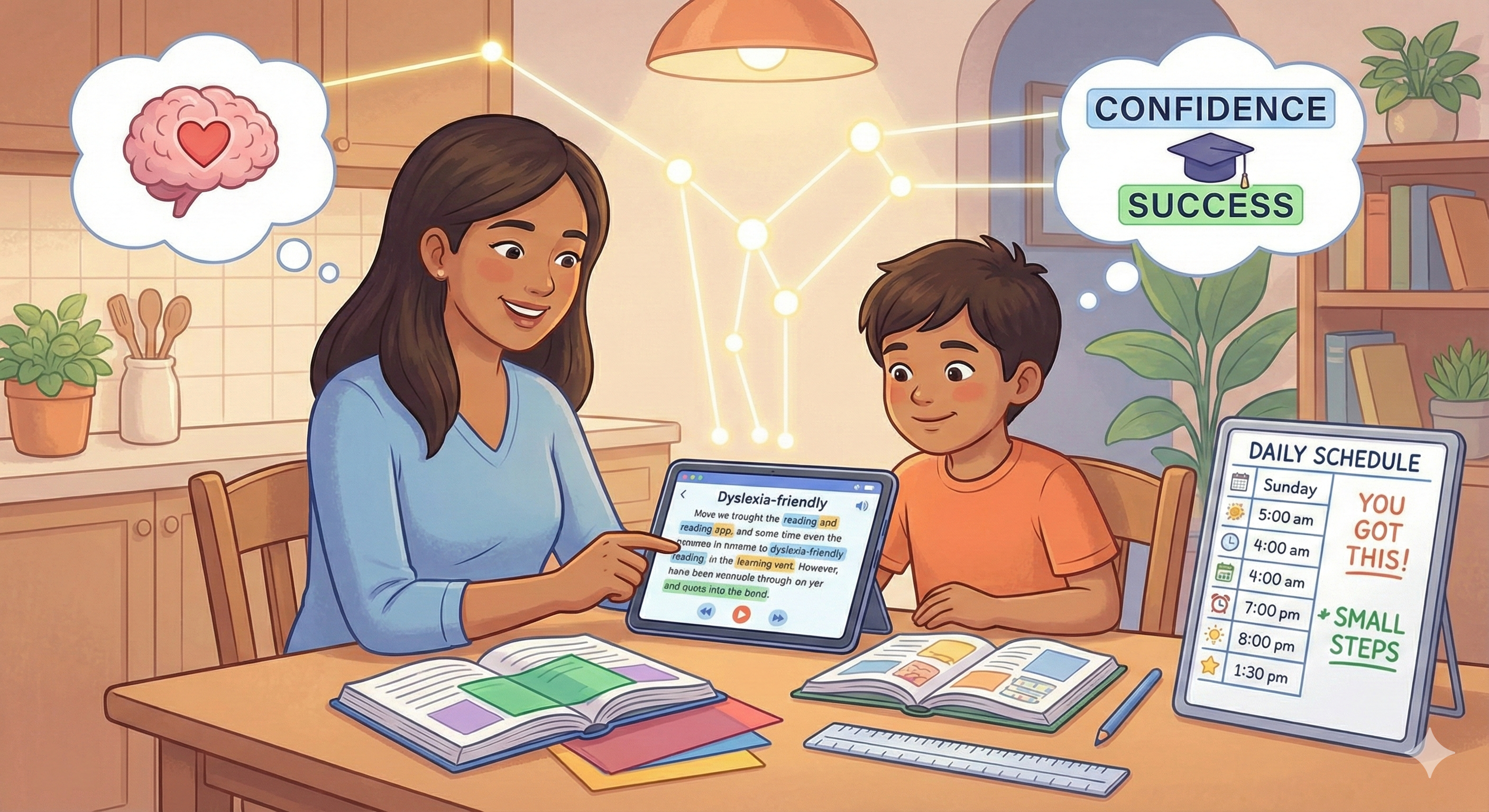
Learning that your child has dyslexia can bring a mix of emotions—concern about their future, relief at having an explanation, and perhaps uncertainty about how to help. The good news is that with the right support, children with dyslexia can thrive academically and develop into confident, capable readers. This guide will show you how to create that supportive environment at home.
Understanding Dyslexia: What Every Parent Should Know
Before diving into strategies, it's essential to understand what dyslexia is—and what it isn't. Dyslexia is a neurological difference that affects how the brain processes written language. It's not related to intelligence, vision problems, or lack of effort.
Key Facts About Dyslexia:
- Affects 15-20% of the population—your child is not alone
- Often runs in families; there may be a genetic component
- Many dyslexics have exceptional strengths in areas like problem-solving, creativity, and spatial thinking
- With appropriate support, dyslexic individuals can become strong readers
Understanding this foundation helps you approach your child's learning journey with patience and realistic expectations. Progress may look different than with neurotypical learners, but progress absolutely happens.
Creating a Supportive Home Environment
The home environment plays a crucial role in your child's reading development. Here's how to set up spaces and routines that support learning:
Optimize the Physical Space
- • Good lighting to reduce eye strain
- • Quiet area with minimal distractions
- • Comfortable seating at appropriate height
- • Easy access to reading materials and tools
Establish Helpful Routines
- • Consistent daily reading time (15-20 min)
- • Regular breaks during homework
- • Predictable schedules reduce anxiety
- • Build in time for non-academic activities
A clutter-free, well-lit reading nook with comfortable seating can make reading feel like an enjoyable activity rather than a chore. Consider adding a small bookshelf with audiobooks, high-interest books at your child's reading level, and any assistive technology tools they use.
Building Confidence and Emotional Resilience
Children with dyslexia often experience frustration, embarrassment, or low self-esteem related to their reading difficulties. Your role in building their emotional resilience is just as important as academic support.
Confidence-Building Strategies:
Focus on Effort, Not Results
Praise the hard work and persistence rather than grades or reading speed.
Celebrate Strengths
Help your child identify and develop their unique talents and interests.
Share Success Stories
Many successful people have dyslexia: Richard Branson, Steven Spielberg, Whoopi Goldberg.
Normalize the Struggle
Let your child know everyone has challenges; dyslexia is just one kind.
Remember: your emotional response matters. When you stay calm and positive during reading struggles, your child learns that difficulties are manageable, not catastrophic.
Practical Reading Support Techniques
Here are hands-on strategies you can use during reading time at home:
Paired Reading
Read aloud together, with your child following along. When they feel confident, they can take over. If they struggle, you seamlessly continue.
Best for: Building fluency and reducing anxiety
Preview and Predict
Before reading, look at pictures, headings, and discuss what the text might be about. This activates background knowledge and improves comprehension.
Best for: Improving comprehension and engagement
Use Assistive Technology
Apps like DyslexiaBuddy can scan physical text and read it aloud, highlighting words as they go. This makes homework and independent reading more accessible.
Best for: Homework, independent reading, building autonomy
Word Games and Puzzles
Board games like Scrabble Junior, Bananagrams, or word search puzzles make learning feel like play while reinforcing letter patterns and vocabulary.
Best for: Making learning enjoyable, building vocabulary
Working with Schools and Professionals
Home support is essential, but it works best alongside professional intervention and school accommodations. Here's how to be an effective advocate:
Advocacy Checklist:
- Request formal evaluation if you suspect dyslexia—early identification leads to better outcomes
- Learn about your rights under IDEA (Individuals with Disabilities Education Act) and Section 504
- Attend IEP/504 meetings and actively participate in goal-setting
- Request specific accommodations like extended time, audiobooks, or use of assistive technology
- Maintain communication with teachers about what's working and what isn't
Consider working with a reading specialist or Orton-Gillingham trained tutor for targeted intervention. Many children benefit from specialized instruction that schools may not be able to provide.
Recommended Tools and Resources
The right tools can make a significant difference in your child's reading experience. Here are some parent-recommended resources:
Apps
- • DyslexiaBuddy - Scanning, read-aloud, AI tutor
- • Learning Ally - Audiobook library
- • Bookshare - Accessible ebooks
Books for Parents
- • "Overcoming Dyslexia" by Sally Shaywitz
- • "The Dyslexia Empowerment Plan" by Ben Foss
- • "Proust and the Squid" by Maryanne Wolf
Online Communities & Organizations:
- International Dyslexia Association (dyslexiaida.org)
- Understood.org - Resources for learning differences
- Decoding Dyslexia - State chapters and parent networks
You Are Your Child's Greatest Advocate
Supporting a child with dyslexia requires patience, creativity, and persistence. There will be challenging days, but there will also be breakthrough moments that make it all worthwhile.
Remember that your child's brain is wired differently—not deficiently. With your support, appropriate tools, and the right interventions, they can develop strong reading skills and, more importantly, the confidence to tackle any challenge.
Take it one day at a time, celebrate every victory (no matter how small), and know that you're making a profound difference in your child's life.
Give Your Child a Reading Companion
DyslexiaBuddy helps children read independently with scanning, read-aloud, and an AI tutor that's available 24/7.
Download DyslexiaBuddy